International supplier of functional membrane separation materials and solutions



Sci-Nano Membrane Technology Co.,ltd.

Membrane technology changes life


Ammonia Removal from Vanadium Mining Industrial Wastewater in South Korea
Case description
Project Background
A molybdenum-vanadium smelting plant in South Korea generates approximately 300 tons/day of high-ammonia nitrogen wastewater, with an ammonia nitrogen concentration as high as 7,000 mg/L. Conventional biological treatment processes are unable to meet the treatment requirements for such ultra-high ammonia nitrogen wastewater, resulting in non-compliant discharge quality.
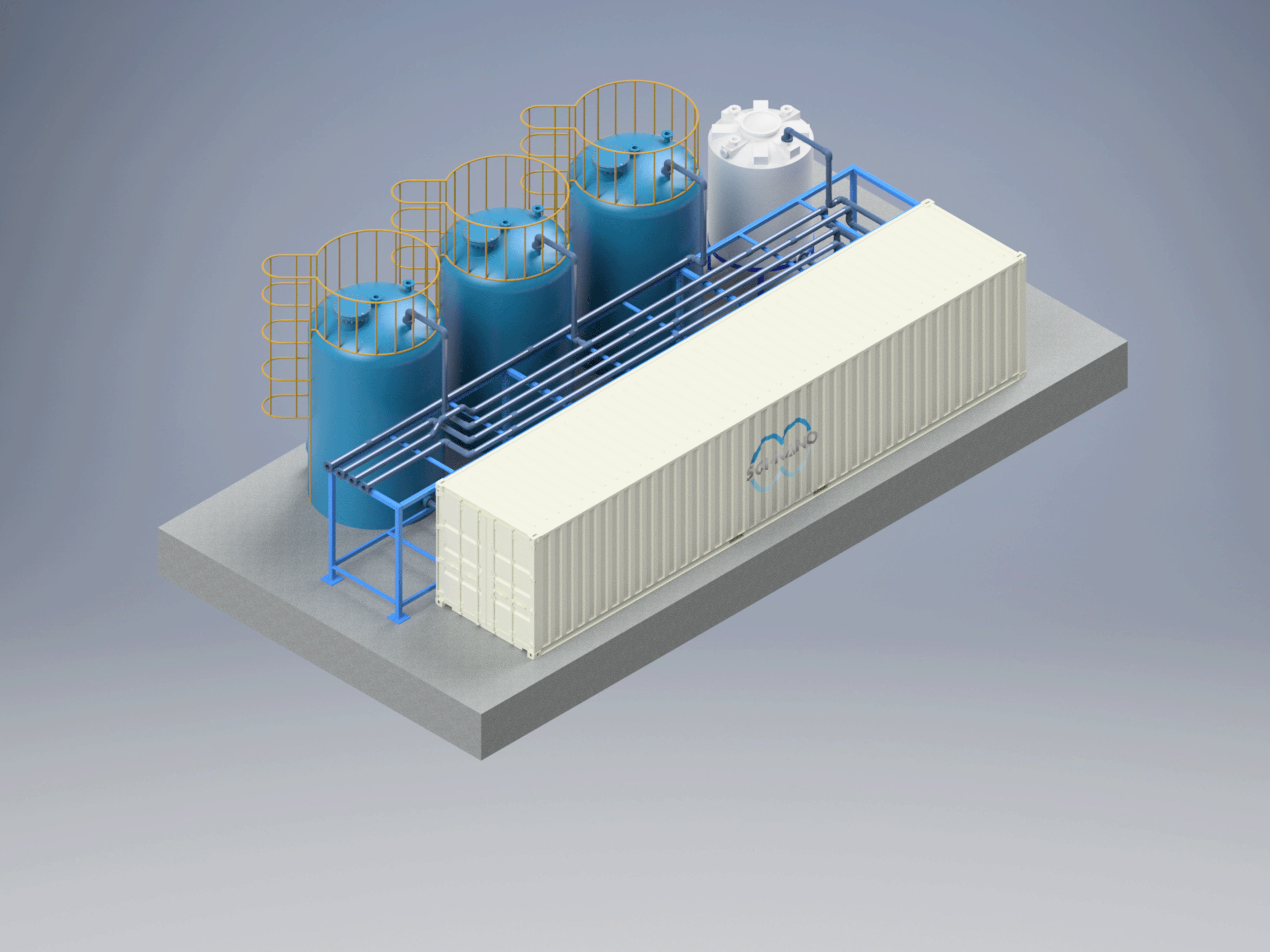
After a comprehensive evaluation of various wastewater treatment solutions, the client ultimately selected SCI-NANO’s membrane ammonia removal technology (TMCS process). The system adopts a pretreatment combined with a three-stage membrane ammonia removal design, effectively ensuring long-term stable operation.
After treatment, the ammonia nitrogen concentration in the effluent is reduced to below 40 mg/L, completely solving the high-ammonia wastewater treatment challenge and achieving safe, stable, and compliant discharge.
This project fully demonstrates the reliability and high efficiency of TMCS membrane ammonia removal technology in treating ultra-high concentration ammonia nitrogen wastewater, and provides a benchmark solution for similar applications in the metallurgical industry.
Process Flow
The system adopts a combined process of:
Pretreatment + Three-stage PTFE Membrane Ammonia Removal System (TMCS Technology)

Process Principle
By adjusting the pH value of the wastewater, ammonium ions (NH₄⁺) are converted into free ammonia (NH₃).

The free ammonia (NH₃) diffuses through the microporous structure on the surface of the hydrophobic PTFE hollow fiber membrane and transfers to the shell side of the membrane module. It then reacts with dilute sulfuric acid (H₂SO₄) to form ammonium sulfate ((NH₄)₂SO₄).
This process enables efficient removal of ammonia nitrogen and ensures stable effluent quality.
Operation Status
Treatment Capacity: 300 TPD
Influent Quality: Ammonia nitrogen = 7,000 mg/L
Effluent Quality: Ammonia nitrogen ≤ 40 mg/L
On-site Pictures


Key words:
Previous Page
Next Page
Previous Page
Next Page
Supporting Products
Welcome your message consultation
Contact Information
Phone: +86-136 0515 6371
WhatsApp: +60 14 389 2529
Mailbox: zili@scinanomem.com
Address: Building 17, Hefei High-tech International Enterprise Port, Liandong U Valley, No. 2899 Kongquetai Road, High-tech Zone, Hefei, China




Copyright©2023 All Rights Reserved of Anhui Sci-Nano Membrane Technology Co.,ltd.